Showing posts with label Rough Riders Way. Show all posts

Tuesday, December 3, 2013

Fan Mail for "Mountain Bikes: Who Needs Them?"


I wrote "Mountain Bikes: Who Needs Them" over twenty years ago now: it was originally published in the February 1993 issue of Bicycle Guide, then the coolest bike magazine in the USA. That article has been on this blog since it went live in 2007, and still generates comments and emails direct to me. This first email came in today, proving, once again, that the writer didn't really read what I wrote. (Boiled down simply, I wrote: What most people call "mountain biking" doesn't require a mountain bike. Likewise, as our ego-bruised writer states, and as I wrote, real "mountain biking" does generally require a mountain bike.):

You sir, are the most ignorant ass hat I have encountered on the internet and single-handedly represent everything that makes road cyclists come off as self righteous douchebags. Just because your idea of mountain biking is a chicken shit ride down a sandy road doesn't mean that road bikes are appropriate or even safe to recommend for most mountain bikers. Virtually every mountain bike ride I take involves some sort of terrain or impact that would disintegrate my Foil faster than you can say something stupid. The idea that the 30 foot doubles or jagged rock gardens that can be conquered at speed on my M9 could even be ridden on a fully rigid road bike is nothing more than your lack of perspective at what is being done on mountain bikes, your hubris at your own skills, and the tremendous ignorance and arrogance that would allow you to post this stupidity online for all to see. - TB, 12-3-13

Adding extra irony is that TB's Facebook background photo shows him on a road bike, even though, in his own words, apparently everyone who rides a road bike is a "self righteous douchebag."

OK, since I'm writing this post, I'm going to take the time to post the emails I've received over the years about my article, so here you go, in chronological order, completely unedited:

I really hate the way you dis mountain bikes. I dispise road bikes they are very    (no extremely) primitive. I ride a full suspension ATB. I wouldnt ride anything else. Do you have a problem with technologie????? - RP, 5-10-98

-----

HA HA HA HA HA HA HA HA HA HA HA!!!!!

You're funny!

Come to Phoenix and ride our rocky, sandy, harsh trails on your road bike so we can laugh at you.  You said in your article that you might only need an mtb for something like Slickrock trail.  Slickrock trail is a freakin' sidewalk compared to my nearest trail; which I RIDE to on m full suspension GT with 2.35 tires.

I started riding on an unsuspended Cannondale in 1986.  Trails that were impossible for me then are cake now.  Believe me I'm thinking for myself.  No marketing hype is going to snatch $2000 from my pocket for a new bike.  I checked them out, rode it and decided the comfort and control advantages of suspension were worth the investment.  I wouldn't go back to riding a hardtail let alone take a road bike on the trail.

Have fun riding cuz after all that is what it is about.
- MC, 12-9-98


-----

Are you the same Chris Kostman that wrote "Mountain Bikes: Who Needs Them?" back in 1993?  That great article had a dramatic effect on my cycling, and all I can say is "thanks you!"

At the time that article came out I was starting to ride off road with an old road bike and loving it.  When I read your piece, I couldn't believe any mainstream mag would print it, and the tips really helped. because of that piece I really went all out, and eventually god rid of my mtb's all together (I won't be riding the Iditabike any time soon). Now I just own one road/bike for everything - and my bike handling skills and the types of terrain I can cover on it have grown exponentially. Your piece really snapped me out of the money-draining, must-have-the-latest-hi-tech-gizmo thing. As I recall there were some pretty amusing letters that followed that piece - along with that great follow up article you wrote (in the BOB mag?). - GK, 5-13-99

-----

Dear Mr. Kostman,

I chanced across your self-defense rebuttal about mountain bikes.  I'm not a biker myself, but I want to pat you on the back for standing up for yourself.  It is truly sad when ignorant people beat up on another person's ideas which they do not understand.

When you speak from experience and others complain by theory, I'll believe the guy with experience every time. Like you said, if you're biking on a road, then use a road bike. If a person is biking across broken rocks and fallen trees, THEN get a (highly mortgaged) mountain bike.

I'm too old to bike now. I did grow up in the country and rode a "road" bike to school from grades four through eight. Did own a baby "hog" (Harley) for a short time.

Mr. Kostman, you seem to be doing all the right things. Head forward. Don't spend too much time "throwing rocks" at the complaining dummies. Maybe, issue some open challenges, some "put up or shut up" dares: my bike and my skills against whatever you think you've got. Get witnesses, too.


To a winner from CM, 9-14-00


-----

I couldn't agree more, when I was a kid we built trail bikes from 19'" frames and had no gears, one speed, one brake, street tires, and modified short stick handle bars, and I'll bet those bike would smoke any mountain bike on the market today, even without alloys, they weighted nothing, we could pull almost any incline, and fly down any hills at crazy speeds without worry of blowing shocks,,, shocks....? I like to feel the ground. Love the article, bet it pissed off everybody...... lol EK, 5-10-01

-----

Great article about "Mountain Bikes- Who needs them?," though I just came across it in August 2001.  Have you written any updates? 

I'm sure that all of your views have stayed fairly firm, though I'd wonder if you, like me, have embraced more suspension as you get any older? Granted I don't have the skills to set records on 24 hours/ distance races, but for the intermediate/advanced rider who has hit 30 years old and would like to take the shock out of drops, washboards, roots, etc. have you looked to more comfort as you have gotten older?

I don't intend this to be a topic for another article, but I'd like to see your views on the advances in technology/weight loss for some of these 21lb. full suspension bikes and if anything has changed with age. Thanks,
EV, 8-21-01

-----

I have been relieved of my job at the local bike shop for 'being too roadie.' I am living in a fairly pavementless area on the northern shore of lake superior, where I ride forest roads and trails on my rb-1 or my steel bianchi cyclocross bike.  When I feel like pavement riding I usually grab my old Bianchi Pista. - CJ, 5-22-02

-----

I think you have a serious attitude problem and feel sad that you have so much anger towards a truly wonderful pursuit. Perhaps a bit of therapy or a change in ethnicity might make you a happier and less critical soul. Have a nice day. - Y, 7-30-02

-----

Chris Kostman invented under-biking, first in Bicycle Guide on an RB-1 and, later, in the '94 Bstone catalog. I singletrack my Romulus because Chris told me it was possible. - JB, 4-21-04
 

-----

It occurs to me I need to thank you for writing all those years ago about riding road bikes on unpaved surfaces. Inspired by your writings, I've developed a love of dirt and gravel road travel on my Mercian fixed-gear. - RF, 5-3-04

-----

That link was a jumping off point for a bunch of weekend reading in the Way subdirectory of your web space.  Much great stuff, thank you.

One Nit:  You say "trust me when I say I'm just an Average Joe, not a Superman."

Ahem.  someone who will go out for 125 rides with two bottles of water and a energy bar?
 

Someone who will do the triple iron-man thing in France?  Someone who races RAAM as a 20 year old?

Helllooooo!! Reality knocking! "Average" is not an accurate adjective.

Now, if I complete the Cascade 1200 this June - less than two years after my first century ride, less than three years after ending 20 years of sedentary living with becoming a bike commuter - I'll stand up as your "Average Joe".  Until then you need to find another "average" stand in.


Done with the nit.

Thanks for the training advice on the site.  I'm applying it.
- MR, 2-29-05


-----

Hey Chris... Its nice to hear from the author himself. What I meant by flushing it out more, is that you tell us to develop skills so good that technology becomes meaningless. You don't dig further and tell us how to maneuver a skinny tire through 2" of sand. You take the approach of "Go for it!". Which is great, but takes a giant leap of faith for someone who isn't accustomed to the idea.

I'm willing to take my 23mm up and down a nearby fireroad, but I also have trails near me which require creek crossing (will hitting an unseen rock produce a pinch flat faster than a knobbie), or sand patches, or wide singletrack with deep ruts from the knobbies before us.
 

It seems you gave birth to the idea of US cyclocross, early!  Last month, I was planning on quelching my bike desire by building up a go-fast, a tourer, a singlespeed/fixte, a grocery getter, a you name it. Then, I realized, I could do all of this with a change of wheels. Specialized bikes are for specialized people. If all I did was tour, I think I'd want to get a tall touring frame for myself (I'm 6'6"). But, if all I did was MTB, I don't think a tall tourer would work for the agility needed of some trails.  Perhaps I'm mistaken, I'm still new.  :)

Anyway, I've got my eyes on the surly cross-check and acquiring a couple set of wheels.   I look forward to experimenting with different options. Thanks for writing your article!
- DB, 2-28-05


-----

Thanks to you also for your efforts over the last 15+ years. I was really psyched on you and the B-stone boys rallying XOs in the dirt when I was in college and on your lightning rod "road-bikes-on-the-dirt" article. There was a whole crew of us at that time in North Georgia riding beat old 700c roadies on these great epic dirt loops, some of us on tubs. Anyway, it was a big influence on me. After a short trip into MTB style equipment in the late 90's (still rigid onespeeding with cantis), I ride nothing but skinnies in the dirt (35s). Later on pal, MC, 3-9-05

-----

Well, if the photos on your site are an indication of the kind of "trails" you ride, then no, you don't need a mountain bike. Come on out to the Rockies and see how long your wheels last.

Beautiful rides, by the way. They remind me of my commute. I'd take my Atlantis on them.
- HCH, 9-5-05


-----

Anyone who is seriously into mountain biking, knows that training on a road bike in addition to trail riding, is the key to mountain biking success. In other words, to be good on a mountain bike, especially where endurance events are concerned, spending more time on the road bike than the mountain bike is often necessary.
 

I would not, however, designate one as "better than" the other, they are just "different". Which many people will not hear in their rush to "defend" since becoming defensive is a normal reaction in human nature, when people perceive that their beliefs are being questioned or attacked. There is a definite place in any cyclists arsenal for a mountain bike. I sure wouldn't take my carbon Cinelli with flyweight carbon fork up any mountain bike trail, and the mountain bike allows us to ride where the road bike doesn't, but for pure conditioning, the road bike is essential as AN ADDITION, not as a replacement.

Here is an interesting fact I discovered quite by accident. When riding El Moro a few times I used to see people hiking with poles, and asked them what they were training for. They replied "Whitney". OK, well I'd planned to do the Whitney hike before meeting those people, went forward after my encounters with the pole hikers, and did the hike solo, without any sort of "hiking training" whatsoever. I pretty much aced it up and back in less than 13 hours, since it is not really hiking, but more like stair climbing, two steps at a time. Much like the leg movements we make when cycling, and using the same muscles. I never once trained by hiking, and I am quite sure, as I passed all those people with hiking poles on the trail, that all of my road and mountain biking prior to doing the Whitney hike, was the key to my success.
 

Why polarize people with the idea that "my ride is better than your ride"? Each bike has its own function, the applications are simply different, not better or worse. - BM, 3-30-10

-----

I was amused in Chris's article re "mountain bikes." During the early '60's I was known, to the Oakland East Bay Regional Park Service, as that crazy "Mountain-man": IF I couldn't ride it (over the terrain) I carried it. Me and my trusty English-made traditional 10 speed!! There wasn't a fire road or mountain trail that ever slowed me down. If it was there ... I traversed it. On another note, six years ago, I encountered an hysterical mountain-biker: he was riding DOWN a trail that only a mountain goat would ever attempt ....... of course ........ I was going UP:)  It seems that he felt that his $7,000 mountain bike (I bought my first house for less than that) would take him, safely, anywhere. Wrong! But for this old guy (me), he and his $7,000 "magic carpet" would have ended at the bottom of a jagged rock filled ravine. I saved him and his trusty steed from total carnage. I did everything to put him back together except wash his "dirty laundry":)) I remember this well because I still have two torn rotators that, periodically refreshes my gallantry:) Ah, yes: $7,000 for a luxury ride to near total destruction. I may not be able to enjoy the trails any longer but at least I don't have to worry about saving some nut ass pedaling a $7,000 hype. My old ten speed had Dunlop Road Speed radial tires with heavy-duty inner tube. I rode this bike thousands of miles ...... NEVER had a flat!!!
 

So, my enfashionados/demons: reread Chris's old article re: 'Any bike Anywhere' .... get real and save yourself some $$. By the way ..... I ride, daily, 30 miles of 'Alpine Pass' mode, on my $3000 Star Trac recumbent stationary bike:)) But, if any of you, out there, with an old "clunker" AND a healthy pair of gams ....... I'll gladly trade you ....... just kidding. I wouldn't ask that of anyone. In the meantime ..... I'll just peddle my ancient hulk to no-where. And .... I'll be happy in knowing that I'm still able to grunt, huff, pant .... AND complain:)) The signature of a true jock.

The worst incident with my old 10 speed was when I was tooling down College Ave. in Berkeley, California ..... some IDIOT opened his, parked, car door in front of me. I had no choice but to grab the door frame. My bike ended in some shrubs. I got a big grass stain on my posterior. The car?: popped windshield, broken door hinge, and a smashed hood where this 250 pound muscled cyclist bounced from the hood onto a lush green lawn. The driver?: wet pants .... as I read him the riot act!!!!!!!!!!!! You guys have been there so you know how good it is to ride the trails and away from two tons of steel with a loose nut behind the wheel!!!

Yours in the sport of friendly humor along with just plain common sense.
- AA, 3-3--10


-----
Over this winter I think I will finally scan and post all the letters to the editor which were sent to Bicycle Guide back in 1993, many of which were very supportive from those who "got" what I was saying, while others were just hilarious. That 1993 article is truly the gift that keeps on giving, when I consider how it still evokes knee-jerk responses from people whose identity is tied up in the width of their bike's tyres, along with positive, friendly emails from those who got my point and appreciate the adventurous way of life.
Meanwhile, enjoy the ride, everyone. Life is short!

Wednesday, April 11, 2012

Keeping It Light

The author with his mascot, Gumby, during the 1987 Race Across America. What could be more fun than having my sister-in-law crawl inside my inflatable 6" tall Gumby to surprise me?

It astounds me how overly seriously so many people take their cycling and endurance sports. It's like they just literally want to suck the life and the fun out of the whole experience.

Not me!

I honestly believe I enjoy cycling, and getting "out there" under human power, more intensely, and more intently, than just about anybody. I do this largely by "keeping it light."

When I'm out on my bike, when I'm "out there," I make a point of taking everything in, all the time. Some people stare continuously at the white line, or the butt of the rider in front of them, all the time. I don't get that. I prefer constantly using my peripheral vision to soak in as much enjoyment, information, inspiration, and light as possible. Not ony is this fun and smile-inducing, but it helps me to notice little roads or trails off to the side of the road, or way off in the distance on some hillside, giving me inspiration for more places to explore. I'm also more likely to notice weather changes in the offing, or aggressive drivers, or historic markers, or viewpoints to check out. If I don't pay attention, I'm liable to miss that glimpse of wildlife along the way, or a waterfall, or a dolphin in the ocean, or a classic car in somebody's yard or driveway, or a funnily decorated mailbox, or a funny sign, or a funky café or mini-mart. I've got to take it all in!
You noticed those wild turkeys over there to the right, on the way to Lake Cuyamaca, right?

Yes, I really do stop during my rides. It amazes me how many people just blast right over the summit of a big climb, without even stopping to enjoy the view or take photo at the summit. Seriously? Likewise for those who have ridden past some historic marker placed by the county, some historical group, or the Clampers a million times, but have never stopped to read it. I pretty much always stop for those signs. In fact, I want to find an area in California that is thickly covered in historic markers and viewpoints and then create a cycling event that specifically involves stopping at all of them! (Any suggestions?)

California Registered Historical Landmark No. 858, along Sunrise Highway on Mount Laguna.

If cycling isn't about embracing the world around us and getting to know it, why not just ride indoors on a trainer?

Naturally, I at least nod at all the other cyclists I see, and sometimes I wave at them. Amazingly, I even verbally greet those riders that I catch along the way! (I know, I know, that's so uncommon anymore. Sad.) Of course, I don't discriminate based upon their type of bike, clothes, or anything else. Anybody on two human-powered wheels is fine by me, and automatically "on my team." (I make a point of chatting it up with motorcyclists, too, treating them as fellow two-wheeled lovers of the world. Being a human is the best way to be respected by another human, I believe. However, if one slides off the pavement because they are driving their motorbike like an idiot, I will ride on by.)

When I meet somebody to go for a ride, I am actually there to ride with them. I know, call me crazy, but it's not my idea of fun to "half-wheel" a friend. The friendship, conversation, and mutual enjoyment are paramount when I ride with somebody. I also keep it light by talking a lot - generally about non-cycling stuff - with my friends when I'm riding. All that sullen silence so common in group rides is not for me. (Quite boorish, that is.)

Of course, I enjoy a silent jam with friends sometimes, too: Let our pedals do the talking! But when I really want to "train," which isn't often, I join a racing type club ride, enter a race or timed event, or I just go ride on my own and use my heartrate monitor and personal records on various stretches of road to push myself.

My late friend and mentor, Willard Bascom, said "The whole point of life is to enjoy it." By keeping it light, I do that as much and as often as possible.

Yeah, I stop to check out these kinds of signs, too. That's my Ritchey Break-Away. In this case, they explained the devastating, but natural, fire which had swept through this area of Mount Laguna.
OK, we all stop to get water at National Forest Visitors' Centers, but how about going inside? They often have neat pins, postcards, books, and maps which I'll buy during a ride. Nice volunteers, too!
Just one of many displays inside the Visitor's Center shown above, atop Mount Laguna. Want to visit this amazing Mount Laguna? Come ride our Mount Laguna Bicycle Classic in April! Info.

Tuesday, April 10, 2012

Racing to the Light

Above: A giant painting called "Picture Without Words" by Edward Ruscha, as currently on display at the Getty Center, the inspiration for this post. This photo of the painting is by the author.

I've been thinking about "light" a lot lately, on a multitude of levels. For example, we ultra athletes are all "racing to the light" in many ways: During our ultra challenges, we're moving forward relentlessly, through the night, towards the sunrise, the first break of dawn. Each new day brings forth new opportunities, new energy, and perhaps the day in which we'll cross our finish line.

Likewise, when we're racing eastward, as I was for nearly eleven days during the 1987 Race Across America, we're racing right into the morning sun every day. When I did that race, I'd sleep three hours a night, from about 3 or 4am to 6 or 7am*. I always went to sleep when it was still dark out, and then got up after the sunrise, to pretend, in a way, that I had slept through the whole night. After I got up, I'd get back on my bike, and start rolling eastward, usually with some oatmeal to eat while pedaling. Not worrying about my speed just yet, I'd be squinting into the new day's sun. The memory of that daily ritual is one of the strongest of the entire experience.
As I'd roll towards the light, I'd set my goals for the day: which state lines I'd cross that day, which other racers I'd pass, where I'd want to arrive by nightfall, and how many miles I wanted to ride before I finally took my three hour sleep break. That morning process of setting goals would repeat until the finish line. "The fulness of life lies in dreaming, and manifesting, the impossible dreams," wrote Sri Chinmoy.
Go east, young man: The author during the 1987 Race Across America.

Crossing the finish line of an epic race in the darkness feels more like denouement than climax to me, so finishing in the daylight is always a goal of mine, whenever possible. When I arrived at the Washington Monument after pedaling 3,127 miles in ten days, 23 hours, and 58 minutes, it was just shy of 2pm on a weekday. The whole city was abustle, I felt part of the energy, and the light was streaming down on me. I was alive, and all was well:

"Light" has many other meanings and connotations, as well, and I will explore them more in future posts and articles.

* During RAAM, I did not sleep the first or last nights of the race, so I slept a total of 24 hours during eleven days. Amazingly enough, that's considered a lot by RAAM standards. Many competitors get by on half that amount. I consider that stupid, self-defeating, not athletic, and, for lack of a better word, not very graceful. I definitely rode faster than I otherwise would have as a result of sleeping "so much" during my RAAM.

Thursday, June 30, 2011

The Classic Cyclist, Part Four

Above: Self-portrait of the author with Jim Swarzman during the San Diego 200km Brevet, January, 2011

The Classic Cyclist, Part Four

By Chris Kostman

Click here for Part One, click here for Part Two, and click here for Part Three of this series.

As I explained in the first three parts of this article, cyclists entering the sport of road cycling over the past fifteen or so years have tended to come in by way of mountain biking, triathlon, or fitness, rather than pure road cycling. As a result, most of these “cyclists” lack the knowledge which makes up the foundation of the classic cyclists’ repertoire and which respects the backbone of the sport. The point of this series of articles it to bring these uninitiated cyclists “up to speed.” Continuing with the theme begun in the first three parts of this article, here are some more things the classic cyclist knows and does:

CLASSIC STYLE

The classic cyclist “looks just right” on his bike. The clean and minimalist bike set-up and the spotless, humming drivetrain are mirrored in two additional manners by the cyclist astride the wheel: Attire is neither garish nor loud, nicely fitting (neither “parachuting” nor the dreaded “sausage effect”), and tasteful. Most importantly, the classic cyclist’s posture and demeanour on the bicycle are confident, relaxed, and powerful with a tendency to ride “back on the saddle” with hands either on the bar tops while in traffic or enjoying conversation with another rider, or deep in the drops while pushing the pace. Pedaling style is the very definition of souplesse. As such, the classic cyclist is recognizable by these trademark characteristics even while running errands in street clothes on a 50-year-old three-speed.

FLOW

The classic cyclist flows seamlessly with other cyclists and road users, while smoothly tackling all that the road and trail surfaces dish out. By staying in the moment, relaxed, aware, and paying attention with full peripheral vision and attentive hearing, “obstacles,” hazards, pedestrians, cyclists, and other forms of traffic are taken into account as forward momentum is maintained. She rides smoothly and calmly, whether riding solo, sitting in a group, or leading a paceline. When others are following, road hazards are quietly pointed out with small, but specific, hand signals and gestures (verbal warnings are rarely used). By riding predictably and elegantly, the classic cyclist saves energy, minimizes risk, and flows proactively through the world.

NUMBERS ADD UP TO NOTHING

The classic cyclist does not fixate on mileage on elapsed time, nor elevation gain. In the grand scheme of things, a 100-mile ride is no better nor more worthy than an 87-mile ride. Miles are ridden for the sake of the experience, not to fill a spreadsheet. (In fact, many classic cyclists eschew bicycle computers and training logs.) Likewise, he will stop to enjoy a view, to read a historic marker, to help another cyclist (or motorist), to take a photograph, or to sit down and enjoy a cup of tea at a new, or favorite, cafĂ©. All such moments are part of “the ride” and are to be savored as much as the hard push up a mountain pass while “putting the hurt” on friends and clubmates.

FINESSE AND BALANCE

Riding no-hands for miles on end, removing or installing booties and leg warmers, and putting on a jacket while pedaling are all commonplace and natural acts for the classic cyclist. Indeed, he can change all pieces of clothing, except for shorts, while pedaling. Stopping for a café or scenic view is one thing, but stopping for actions better done while rolling smoothly onwards is quite another. The skills, balance, and awareness necessary for these classic talents make cycling safer, more graceful, and more rewarding.

THE WHOLISTIC CYCLIST

The classic cyclist is an outdoor athlete who puts a premium on personal health, always takes a broad and selfless point of view, and pursues a soft life’s walk on the planet. Stopping to pick up some trash - especially any items clearly dropped by another cyclist - is a natural, every-ride experience. Running errands by bike, such as stops at the post office and bank at the start or finish of a ride, or actually bike commuting regularly, minimizes her footprint and provides more opportunities to “enjoy the ride.” An attitude of “you only live once” permeates her sense of adventure, her sense of purpose, and her appreciation for all that cycling brings to her life. The classic cyclist lives by the mantra, “if you’re going to do something, do it well.”

##

Chris Kostman has been a classic cyclist since 1982. Besides competing in races as diverse as the Race Across America, the Iditabike Mountain Bike Race, the Triple Ironman, and the 24 Hours of Canaan, he also organizes the Badwater Ultramarathon and Furnace Creek 508 races, as well as the Rough Riders Rally, CORPScamp Death Valley, and a series of four century, ultra century, and double century rides in California. Kostman is regularly seen on the roads and trails of California and beyond, riding brevets, centuries, bike tours, and other events and adventures. Learn more at www.adventurecorps.com.

Above three images: The author and his Rivendell Roadeo prior to the 2011 San Diego 200km Brevet.

Monday, February 7, 2011

The Classic Cyclist, Part Three

Above: The author on 17 Mile Drive in Carmel CA during the Million Dollar Challenge, a seven-day, 620-mile cycling event from San Francisco La Jolla in October 2010 on behalf of the Challenged Athletes Foundation. Photo by Preston Sandusky.

The Classic Cyclist, Part Three

By Chris Kostman


Originally published in Endurance News #73, February/March 2011. Read the full article online here.

Click here for Part One and click here for Part Two of this series. Click here for Part Four.

As I explained in the first two parts of this article, cyclists entering the sport of road cycling over the past fifteen or so years have tended to come in by way of mountain biking, triathlon, or fitness, rather than pure road cycling. As a result, most of these “cyclists” lack the knowledge which makes up the foundation of the classic cyclists’ repertoire and which respects the backbone of the sport. Continuing with the theme initiated in the first two parts of this article from Endurance News #70 and EN#71, here are some more things the classic cyclist knows and does:


SEASONAL APPROACH

The classic cyclist takes a seasonal approach to riding style and fitness variability, understanding that the highest level of cardiovascular fitness and muscular endurance - and therefore cycling ability - cannot be maintained year-round. In fact, different parts of the year lend themselves to different types of riding. As such, a periodized approach to the year is naturally employed, for example: additional cross-training (on and off the bike) in the late Fall, fixed gear in the Winter, base miles as the new year unfolds, more speedwork and club riding in the Spring, then peak events and challenges in the Summer and Fall. The bottom line is a simple understanding that overall health fitness is maintained year-round, but top-level efforts are only possible a few times per year. Riding with the seasons acknowledges this truth and also lends variety to each year’s program or campaign.


OTHER CYCLISTS ARE JUST CYCLISTS, NOT COMPETITORS

The classic cyclist is primarily self-motivated and shares a deep camaraderie with other cyclists on the road. While out riding, cyclists seen ahead in the distance are often overtaken, but they are never passed as if they are competitors in the same race and the finish line is just around the corner. The classic cyclist doesn’t care to “beat” other cyclists who happen to be out on the same roads at the same time. Instead, the classic cyclist will, at the minimum, greet other cyclists and will often engage in conversation with them. When the time is right, the classic cyclist will politely move ahead, or drop back, depending on goals, schedule, fitness level, or whimsy. For pure performance training, the classic cyclist self-motivates by sprinting to city limits signs or other landmarks, or by joining racing-oriented club rides (or throws down the gantlet at special invite rides with other classic cyclists).

TECHNOLOGY IS A TOOL, NOT AN END IN ITSELF

Because the bicycle is used as a tool for exploring the outer and inner universes, the classic cyclist appreciates cycling for the cycling, not for the equipment. The bicycle’s beauty and grace are appreciated for what they offer the rider, but whether there are six cogs or eleven on the rear wheel is insignificant to the classic cyclist. The same goes for shifter type and location. The classic cyclist often “retro-fits” a “modern” bike with down-tube or bar-end shifters to have a more authentic and organic feel for his gear shifting, and to intentionally make shifting less frequent. As well, “race wheels” - which have become ubiquitous as standard equipment on new bicycles today - are saved for just that: racing. Ninety-five percent of the time, classic wheels with 32 spokes and tyres at least 25mm wide are used, providing a comfortable ride, bullet-proof longevity, ease of repair or adjustment (if it’s ever needed) and very small likelihood of stranding their owner while out in the boondocks.

EACH RIDE AN ADVENTURE

Cycling offers such a wide panorama of opportunity, it’s sacrilege for the classic cyclist to do the same rides week after week on a fixed schedule. As such, the classic cyclist uses a higher level of awareness - and map study - to search out new roads to ride, new ways to create loops in otherwise known areas, and new ways to connect disparate regions. The classic cyclist doesn’t wonder what’s down a certain road, or over that hill, she rides out there and finds out for herself. In the process, a deeper, richer understanding of the landscape, the environment, and the character of one’s region is acquired, offering more opportunities for creating new routes and for avoiding anything resembling a rut or a routine.


ANY BIKE, ANYWHERE
Bikes are the ultimate freedom tools: they let cyclists go to more places, more easily, and more simply than any other human invention. But in today’s era of high technology and equipment specialization, they can also seem incredibly limiting. In fact, the common misconception is that without the "right bike," one simply cannot partake in the wonderful landscape of cycling opportunities. “Dirt” must require a “mountain bike,” most assume. But how wrong that is: A “road bike” with tyres of 25mm in width can handle the majority of trails, gravel roads, and fire roads one might encounter. It might be more difficult or challenging to ride those unpaved routes on a road bike, but that is, of course, the point. (Remember, suffering is to be embraced and adventure sought.) Classic cyclists do not choose between "road biking" and "mountain biking" and subsequently let the bicycle determine the route and terrain of any given ride. Instead, creative, "first ascent-style" rides are strung together in one epic route which involves all manner of riding surfaces, sights, sounds, and scenes. Having a memorable, unique, and personal experience of the profound richness of the sport, and of the planet, is what motivates the classic cyclist.


Click here for Part Four.
 
Chris Kostman has been a classic cyclist since 1982. Besides competing in races as diverse as the Race Across America, the Iditabike Mountain Bike Race, and the 24 Hours of Canaan, he also organizes the Badwater Ultramarathon and Furnace Creek 508 races, as well as a series of four century rides. This is his seventeenth article for Endurance News. Learn more at www.adventurecorps.com.

Tuesday, September 14, 2010

The Classic Cyclist, Part Two

Image of the author above by Roy Wallack, from the 2010 Rough Riders Rally

-->The Classic Cyclist, Part Two

By Chris Kostman

Originally published in Endurance News #71, August/September 2010: Read the full article online here.

As I explained in part one of this article, Road Cyclists entering the sport over the past fifteen or so years tend to come in by way of mountain biking, triathlon, or fitness, rather than pure road cycling. As a result, most of these “cyclists” lack the knowledge which makes up the foundation of the classic cyclists’ repertoire and which builds upon the backbone of the sport. Continuing with the theme initiated in part one of this article, here are some more things the classic cyclist knows and does:
FOR THE LOVE OF THE SPORTThe classic cyclist rides first and foremost for the pure love of cycling, for the fun and enjoyment that comes from bonding with a simple, beautiful, and ingenious mechanical device and ranging the world. This cyclist rides for the wind in the hair, for the sensation of hot, cold, humid, wet, or dry on the skin, for carving up rolling terrain like riding a roller coaster, for the sensations of a pounding heart, sweaty brow, and heaving chest. The pursuit of adventure, camaraderie, and well-being astride a wheel are the primary driving forces behind every ride. “Training” is reserved only for preparing for specific competitive, or personal challenge, efforts; it is not the only, or usually primary, motive for heading out the door.
MENTORSHIPThe classic cyclist learned skills and etiquette from other classic cyclists, usually one or two masters in particular who took the time to encourage and enlighten the neophyte. Over time, the neophyte also becomes a mentor, passing along knowledge, wisdom, and specific tricks of the trade through specific instructions and by example. Cyclists are not born knowing how to trim a front derailleur, how to quickly clip in while starting on a steep grade, how to scan through the back windows of cars for drivers about to open their doors, or how to ride deep in the drops with a straight spine and relaxed shoulders. Mentors imbue new cyclists with these and many other pearls of wisdom, coaxing them along their journey to mastery.

EMBRACES MOTHER NATURE

The classic cyclist embraces the whole panorama of weather that Mother Nature provides and doesn’t shirk from riding in less-than-ideal conditions, nor cut a ride short just because the weather takes a turn for “the worse.” Au contraire, the classic cyclist relishes the opportunity to feel more alive and at one with the environment because of dramatic weather. Whether rain, cold, snow, heat, or headwinds, it is all respected without judgment as “just weather being weather.” Riding only on sunny weekend mornings in the same matching “kit” on the same route every week does not intrigue the classic cyclist.


CLEAN STEED, SELF-SERVICED
The classic cyclist keeps her steed clean and free of unnecessary add-ons. No more than one gadget is attached to the bike, the handlebar tape is clean (and preferably white), there are no garish colors nor logos, and the entire “ensemble” of the bike itself is understated, simple, and stylish. The classic cyclist also maintains the steed herself, keeps it finely tuned, and knows how to make adjustments on the road. For example, she routinely amazes other cyclists by reaching down to make a rear derailleur adjustment on another’s bike while stopped at a light: a quick flick of the wrist restores that bike’s drivetrain to purring perfection. This deep understanding of the workings of the bicycle allow the classic cyclist to repair, or make work-arounds, for any mechanical mishap encountered on the road. As well, a proper seat pack with a comprehensive multi-tool, two tubes, patch kit, and a small but specific selection of “ride-savers” keeps the show on the road for her and others. Phoning for a ride home is anathema to the classic cyclist.

RIDES TO THE RIDE
The classic cyclist acknowledges that driving to a ride start is to be avoided whenever possible. Tacking an extra ten or thirty miles onto any given ride, in order to transit to and from the ride meet-up spot, is a given; these “bonus miles” are appreciated as an opportunity to warm up properly, find a groove, and start or finish any given outing with the proper classic style and mindset.

Click here for Part One, here for Part Three, and here for Part Four of this series.
Chris Kostman has been a classic cyclist since 1982. Besides competing in races as diverse as the Race Across America, the Iditabike Mountain Bike Race, and the 24 Hours of Canaan, he also organizes the Badwater Ultramarathon and Furnace Creek 508 races, a series of four century rides, and the Rough Riders Rally. This is his sixteenth article for Endurance News. Learn more at his blog, www.XO-1.org, and at www.adventurecorps.com.

Thursday, July 1, 2010

The Classic Cyclist, Part One

The Classic Cyclist, Part One
By Chris Kostman


Originally published in Endurance News #70, June/July 2010

Photo above of the author (L) and Sky Boyer by Dustin Sharp

Road Cyclists entering the sport over the past fifteen or so years have tended to come in by way of mountain biking, triathlon, or fitness, rather than pure road cycling. As a result, most of these “cyclists” lack the knowledge which makes up the foundation of the classic cyclists’ repertoire and which builds upon the backbone of the sport. Here are some things the classic cyclist knows and does:

PROPER WARM-UP
The best way to start a ride, or conduct any aerobic activity, is to warm up properly. “Warming up” is not just about elevating heart rate, however; it’s also about gradually warming up the entire body and bringing one’s attention to the matter at hand. This takes time to do it properly. A classic cyclist will take the first ten to twenty miles of a ride, or even a race, to warm up properly, usually staying off the big chainring and two smallest cogs. As a result, he or she will actually ride better and more quickly than the current jackrabbit style of cyclists who catapult onto every training ride or event. Frankly, it’s shocking to me that riders today just take off “like a bat out of hell” even on a training ride, or social ride. Back in the day, at a double century or a road race, riders would all cruise together for the first hour or more, socializing while warming up properly. They’d end up becoming fitter, setting faster PRs than riders today in the same events, getting to know one another better, AND having more fun.

WORK TOGETHER

Most cyclists nowadays not only don’t know how to ride in a paceline, but that they don’t even understand why they should. In ultras, or even club rides, where drafting is allowed and the overall intention is to get down the road ASAP, one thing should be kept in mind: Work together, and when it’s not your turn up front, covet that rear wheel of your buddy! In the moment, you may think “it’s too hard to keep up at this speed,” but the classic cyclist knows that riding solo instead of with another means more work and less speed. Where’s the logic in that? Equally important, there’s a beauty and a grace to working with one or more fellow cyclists with an “all for one, and one for all” attitude.


This effort to keep the group together is specifically continued at checkpoints during events; those who arrive together, leave together. (Riders today will often sneakily slip out of a checkpoint a minute or three ahead of the riders whose wheels they were just drafting. Riding solo, or with just one or two others, they will then ride more slowly than they had been in the group. Why not just keep the group together after the checkpoint, too?)


EMBRACES SUFFERING

Allow me to let Tim KrabbĂ©, author of “The Rider,” explain:


"The greater the suffering, the greater the pleasure. That is nature's payback to riders for the homage they pay her by suffering. Velvet pillows, safari parks, sunglasses; people have become woolly mice. They still have bodies that can walk for five days and four nights through a desert of snow, without food, but they accept praise for having taken a one-hour bicycle ride. 'Good for you.' Instead of expressing their gratitude for the rain by getting wet, people walk around with umbrellas. Nature is an old lady with few friends these days, and those who wish to make use of her charms, she rewards passionately."
 

The classic cyclist accepts suffering as an intricate part of the experience. He or she certainly doesn’t whine in person, nor blog about “how tough that was” after the fact, nor just “call it a day” like some child collecting up his toys from the sandbox to go home and pout with Mommy.
 

ESPRIT DE CORPS

Whether he or she rides as a lone ranger or a dedicated club rider, the classic cyclist shares a bond with all fellow cyclists. As such, other cyclists are always acknowledged along the road, usually with a tip of the head to riders in the opposing direction, or a cheery hello when passing or being passed. Classic cyclists never ride hi-lessly, wavelessly, and nodlessly by. Likewise, categorizing or deriding other cyclists is a pursuit never considered. All on bicycles are appreciated and respected.


EQUIPMENT IN SYNCH WITH ABILITY

Until about 20 years ago, it was relatively easy to spot a good cyclist. Simply put, good bikes went with good riders. Sometimes good riders went with so-so bikes, but the opposite was almost never true. Unfortunately, that's not the scene today as cycling has become trendy, hip, and stylish. (Note that stylishness is, of course, the absolute antithesis of style.) Cycling has also become a status-related activity, so much so that when one sees a really fine machine humming down the road or trail, it is almost invariably being ridden by someone whose ability doesn't come close to matching his or her checking account. Of course, the classic cyclist can spot the poseur right away, regardless of his or her equipment (but is still nice to him or her).

See the original publication of this article in the scans above and below.


Chris Kostman has been a classic cyclist since 1982. Besides competing in races as diverse as the Race Across America, the Iditabike Mountain Bike Race, and the 24 Hours of Canaan, he also organizes the Badwater Ultramarathon and Furnace Creek 508 races, a series of four century rides, and the Rough Riders Rally. This is his fifteenth article for Endurance News. Learn more at his blog, www.XO-1.org, and at www.adventurecorps.com.

Thursday, March 18, 2010

Any Bike, Anywhere: The Rough Rider's Way of Life

Above: The author in 1993, from the Bicycle Guide photo shoot. Photos by Bob Schenker shot on the Westridge Trail above Oakland, CA. Nothing has much changed since then, except the Magnum, p.i. moustache is gone and he's got Hammer Nutrition's HEED and/or Perpetuem in his water bottles now. The pictured Bridgestone RB-1's spirit lives on in Chris' current Rivendell Roadeo.


Any Bike, Anywhere: The Rough Rider’s Way of Life


By Chris Kostman

Originally published by Hammer Nutrition in Endurance News, Edition #68, March 2010. View that version online here.

In the February 1993 issue of Bicycle Guide, I published an article called “Mountain Bikes: Who Needs Them?” which began with this hackle-raising opener:

“I routinely dust every mountain biker I encounter on the trail. And I ride a road bike.”

Speaking the truth more fully, I then hooked the readers a little more deeply by continuing thusly:

“Furthermore, I think, no, I know, the mountain bike is the most over-rated, most improperly used, most over-built, and most greedily promoted piece of hardware to hit the sport and fitness industry in modern history. Ninety-nine percent of the miles ridden by 99% of the mountain bikes could, and should, be ridden on the first and only real all terrain bike, the 'road bike.' More bluntly, a road bike is equal to or better than a mountain bike if ridden with skill like I have.”

At first, the hate mail poured in, more than for any article ever published in that magazine, with readers calling me “the most arrogant, elitist bastard I’ve ever read” and similar gems. One reader was at such a loss for words that he just sent in a fax of his hand with the middle finger raised.

But then a neat thing happened: Some readers went out and tried my premise. More letters ensued from readers who claimed they had used their road bike to set a new course record at a “mountain bike” hill climb event; others made bigger claims, stating that their lives had been changed, for the better, forever.

Here we are eighteen years later and “Rough Riding,” as it has come to be known, is beginning to come into its own as a particular sub-category of cycling. The motto from my article - “Technique beats technology any time, anywhere.” - has been adopted by innumerable cyclists the world round who have embraced the “any bike, anywhere” ethos. The current bicycle industry, from major manufacturers to boutique frame builders, is beginning to address this niche market, creating bicycles, or even lines of bicycles, under such monikers as "All Road Bikes," "All-Rounders," and "Adventure Bikes." There’s even a Wikipedia page about Rough Riding.

Rough Riding is nothing new, however: Before "mountain bikes," cyclists routinely rode all manner of bicycles on all manner of riding surfaces. They just didn’t know any better, you might say. The oldest known mixed-surface cycling club is the Rough Stuff Fellowship, formed in the United Kingdom in 1955.

That’s not to say Rough Riding is mainstream, of course. In fact, it’s a common misconception that without the "right bike," one simply cannot partake in the wonderful landscape of cycling opportunities. It’s time to set the record straight, though, for any bike can be taken anywhere!

This really isn’t some secret conspiracy that I am blowing the whistle on here, for cyclists the world round take "the wrong bike into the wrong place." Just ride any century ride and you’ll see innumerable mountain bikes and cross bikes being comfortably and happily put to good use in grinding out the 100 miler. (Heck, mountain bikes have even been ridden successfully in 500 mile road races like Furnace Creek 508!)

How does all this work, you ask? It’s simply a case of the rider riding the bike, not the reverse. In other words, let technology work for you or just don’t use the technology in the first place. Think about it: turning cranks in circles is turning cranks in circles. Whether that translates into covering terrain efficiently is entirely up to the skill and strength of the rider. With time, any rider can learn to ride any bike anywhere. The trick is just getting out there and going for it!

Bikes are the ultimate freedom tools: they let you go to more places, more easily, and more simply than any other human invention. But in today’s era of high technology and equipment specialization, they can also seem incredibly limiting.

The Rough Riding philosophy can mean different things to different people. First of all, it can mean that you may not really have to shell out the bucks for a new bike because you only have a "road bike" or a "mountain bike." So this can save you a lot of money. But if you already have both types of bikes, then you can hone your skills for either bike by using the "wrong bike" on various rides.

For example, riding skinny tyres off-pavement will hone your attentiveness, balance, coordination, handling skills, and nerve. Likewise, riding fat tyres on-road will build strength, hill climbing ability, and provide a comfy and largely bullet-proof ride. Rides that combine both environments will become a real treat, allowing you to immediately experience the cross-over benefits firsthand.

Regardless of bicycle choice, the goal of Rough Riding is to tackle any and all possible combinations of trails, fire roads, gravel roads, paved roads, singletrack, and any other possible riding surface - all within one ride, on just one bike. Perhaps the greatest beauty of Rough Riding is that any possible ride route can be created and enjoyed: Rough Riders do not choose between "road biking" and "mountain biking" and subsequently let the bicycle determine the route and terrain of any given ride. Instead, creative, "first ascent-style" rides can be strung together in one epic route which involves all manner of riding surfaces, sights, sounds, and scenes. The Rough Riding goal, perhaps? To see it all and do it all, to truly have an adventure. Try it: your life might be changed forever!
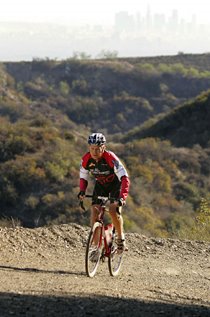
Chris and 99 other Rough Riders will gather in Marin County for the first ever Rough Riders Rally on July 23-25. You’re invited! Info at www.adventurecorps.com/rrr/.

Chris Kostman has lived on the endurance path since 1982. Besides competing in races as diverse as the Race Across America, the Triple Ironman, and the 100-mile Iditasport Snowshoe Race, he also organizes endurance events such as the Badwater Ultramarathon and Furnace Creek 508 races, plus a series of four century rides and a five-day cycling retreat in Death Valley. This is his thirteenth article for Endurance News. Learn more at www.adventurecorps.com.